The launch of the RSPCA Animal Welfare Evidence Centre
Plugging the gaps in research and evidence to prevent animal harm
Plugging the gaps in research and evidence to prevent animal harm
Blog, Health at Home, Health in Conservation, Health in Diets, Health in Therapeutic Practice, Practices, Representations, Updates
Key Contact
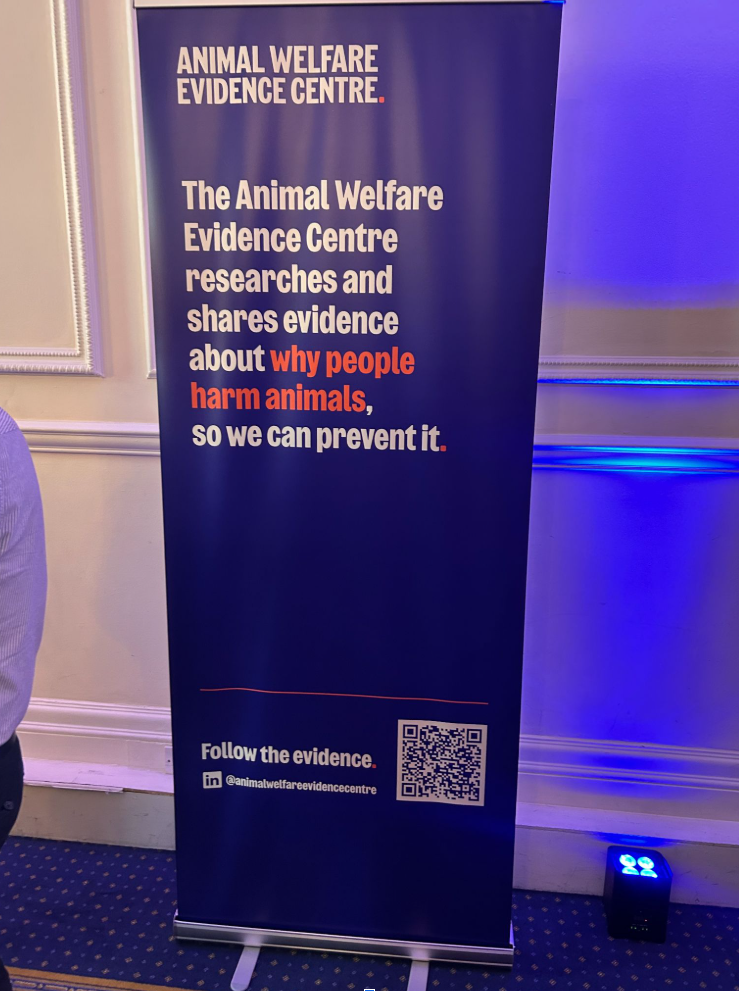
On the 10th September 2026, the RSPCA held a launch event for the new Animal Welfare Evidence Centre in London. The centre is a partnership between the RSPCA, Compassion in World Farming, Humane World for Animals UK, and Four Paws UK, and aims to plug the gaps in current research and evidence to prevent animal harm upstream.
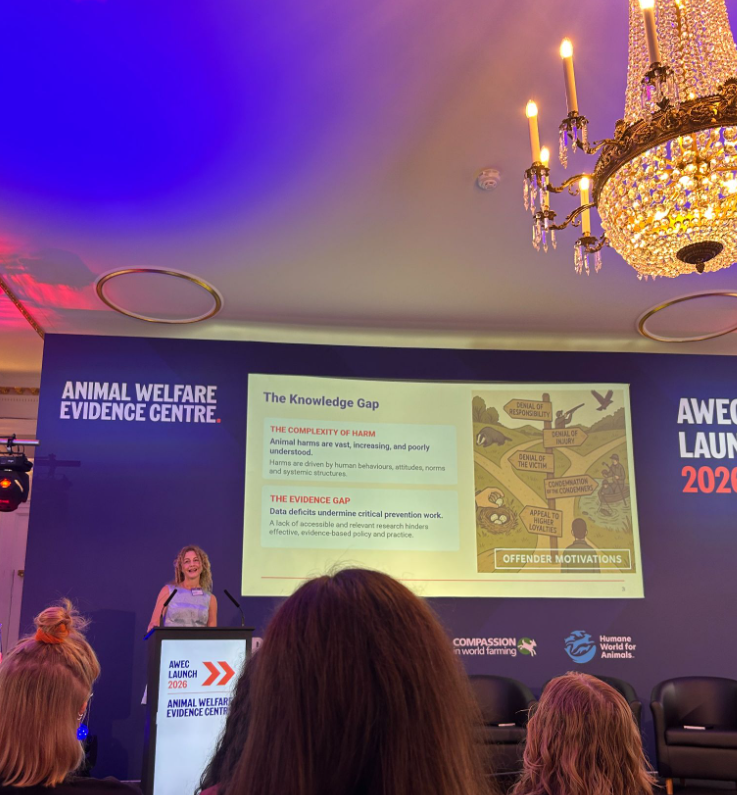
The launch event opened with a welcome and introduction to the centre by Joanna Roland, CEO of RSPCA. The message imparted on the audience was one of urgency – animal cruelty affects us all, and we need to develop collaborative and creative ways of understanding how to prevent it. This comes as 21,000 claims of animal cruelty were reported to the RSPCA last year, a number attributed to several factors including the cost of living crisis and increasing harms to the environment. The centre hopes to become a trusted source of evidence that can be practically used to prevent animal harm upstream.
Jenny Maher, the centre Chief of Research, then led us through the aims and scope of the centre. The four pillars underpinning the centre’s research are:
1. Understanding the causes of animal harm
2. Find what works to prevent animal harm
3. Deepening understanding of public awareness, attitudes and cultural norms concerning animals.
4. Applying a systematic approach to animal welfare, recognising how challenges facing animals, people and the planet are interlinked.
The following panel discussion consisted of representatives from Compassion in World Farming, Four Paws, the RSPCA, and WPI Economics (who were commissioned by the centre to produce their first report; the scale of reported illegal animal abuse and neglect in Great Britain).
The discussion highlighted many of the centre’s areas of interest, several of which overlap with those of the Multispecies Mutualisms project. These include how public attitudes of animals are formed, and the role the media plays in perpetuating certain images of species and ‘bucolic’ representations. Also mentioned was the need to better understand ‘lawful but awful’ harms, such as puppy breeding practices that lead to dogs with extreme conformations that carry negative health impacts. All of these areas require robust evidence, including qualitative research that can speak to the big, complex questions around harm in human-animal relationships.