Choosing to move? Birds, climate change and animal agency
Reflections from the British Ornithological Union’s ‘Avian Futures’ meeting
Reflections from the British Ornithological Union’s ‘Avian Futures’ meeting
Key Contact
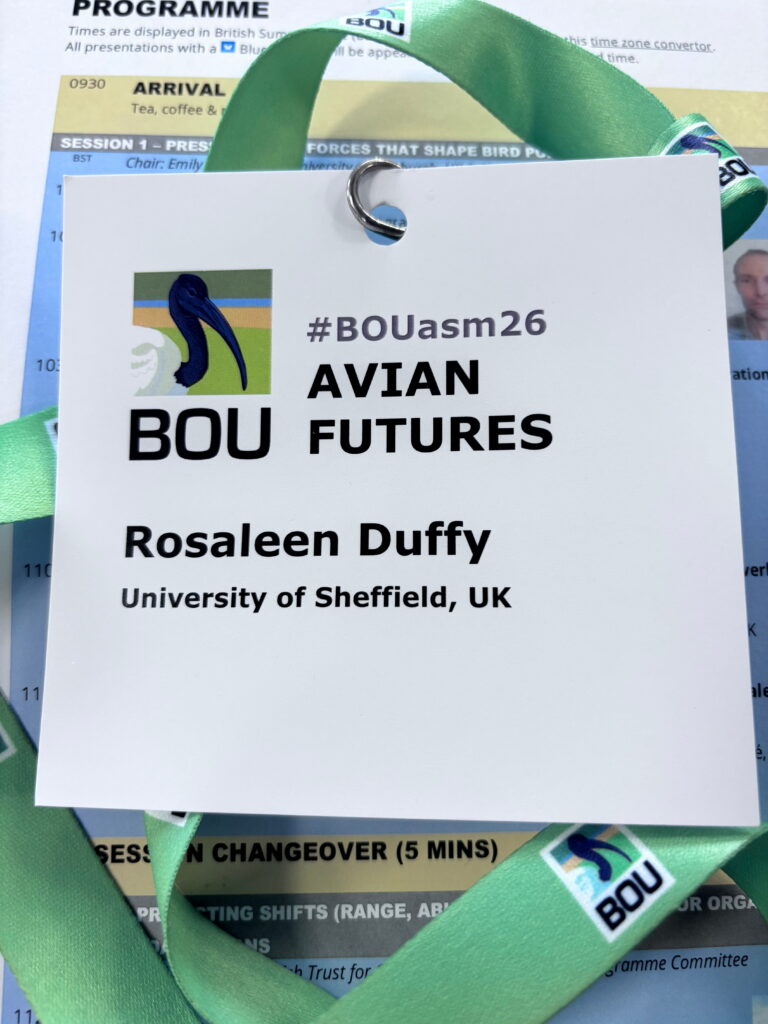
The British Ornithological Union held their annual meeting, entitled, ‘Avian Futures’ on 29 September in York. The overall theme centred on predicting and preparing for the future of avian biodiversity. Rosaleen Duffy attended the meeting, and here are her reflections on the day.
The annual meeting was a really interesting, and enjoyable, mix of keynotes, presentations and lightning talks delivered by academics and practitioners. Some key themes came through very strongly, which prompted me to think about how they relate to the ways we are trying to understand multispecies mutualisms in our project.
Anthropogenic environmental change was central to understanding, and predicting. the future populations and distributions of bird species around the world. This featured in presentations on meeting 30×30 targets, the use of AI and other technologies in bird monitoring and modelling, the importance of citizen science, the ways that the fossil record may allow us to recreate maps of species distribution, amongst many other interesting topics.
What came through very strongly throughout the day was the dynamic interactions between climate change, animal agency and the potential futures facing birds. Climate change featured heavily across the day. It was particularly intriguing to listen to discussions on how birds are, and are not, adapting to climate change, and what that means for their long-term survival.
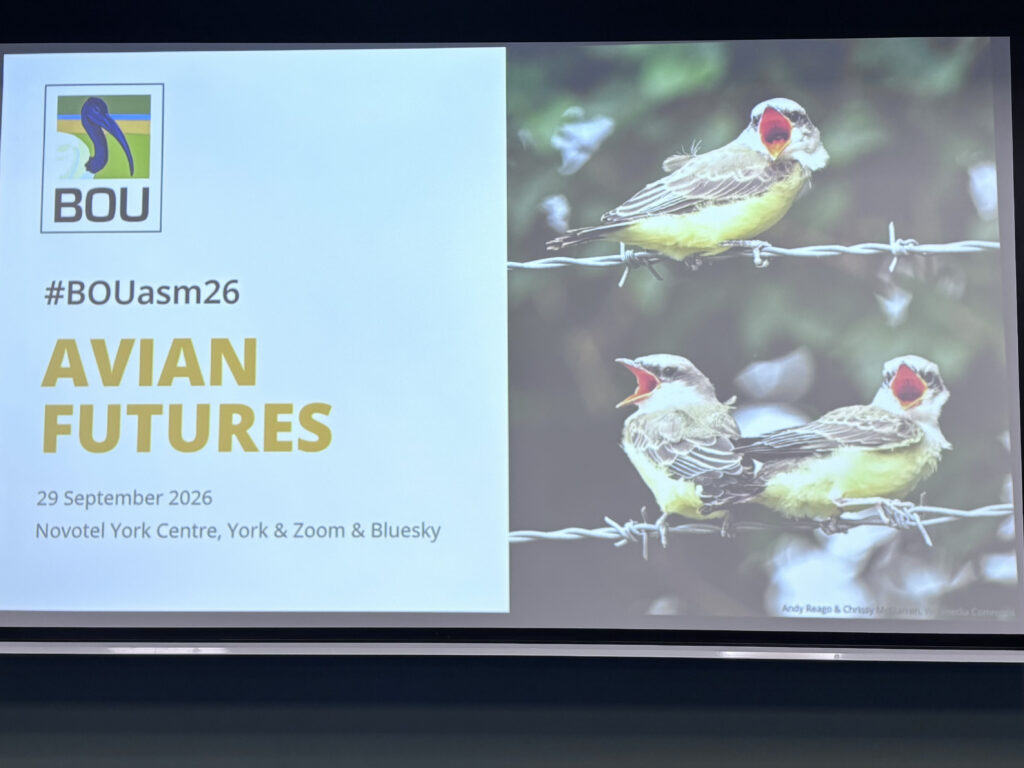
For some birds the ‘response’ to climate change is mass die offs due to more extreme weather conditions. Alternatively, some birds are able to, or choose to, move – migrating permanently or temporarily to new locations. Other birds (species or specific populations of some species) do not move – they cannot or choose not to move – making them more vulnerable to the effects of climate change. This was apparent in the discussions in ‘Extreme Climate Events’ such as storms. The question was raised whether we should stop calling these extreme events, since they were now becoming more common, with devastating winter storms in the North Sea almost ‘the norm’ now.
For me this raised the question of animal agency and animal cultures– which is one of the main issues we address in the Multispecies Mutualisms project: why, and how, do birds decide to move or not to move? Why might some birds easily shift feeding sites, but not breeding sites, in response to climate change? How did these responses to environmental change also produce shifts in bird cultures or socially learned behaviours? The theme of plasticity was important here – do birds display developmental plasticity? For example, some populations of storks had stopped moving – with juveniles abandoning their parents’ historical migrations to north Africa in favour of staying in the Iberian peninsula, where human settlements provided year-round food. What will happen to those storks if that food is no longer available because of human population movements? Will they be able to re-learn their Saharan migratory routes or not? In all of these questions, the themes of animal agency and human-animal relations are central. The whole day was very engaging and gave me a lot to think about as the project develops.