Observing global biodiversity negotiations and the Global Stocktake: Was CoP17 Taking Action for Nature?
Rosaleen spent a week as an official observer at the UNCBD CoP17 in Armenia.
I have never been to Armenia or to a CoP of the UN Convention on Biological Diversity (CBD) before. I thought I was well prepared, I’d read the documents, put all the relevant panel discussions in my calendar, pre-arranged a few meetings with conservationists, and identified which negotiations I wanted to observe. But I was really not prepared for the frenetic pace of the CoP. Each day I stepped off the excellent courtesy bus service from Republic Square, made my way through tight airport-style security at the Meridian Centre, and then stared intently at the fast moving video screens trying to work out if I had missed any key events off my pre-prepared list. There was so much going on, from 08.00 to 23.00 everyday – I tried to follow particular themes but I am sure I missed plenty of relevant and interesting discussions.
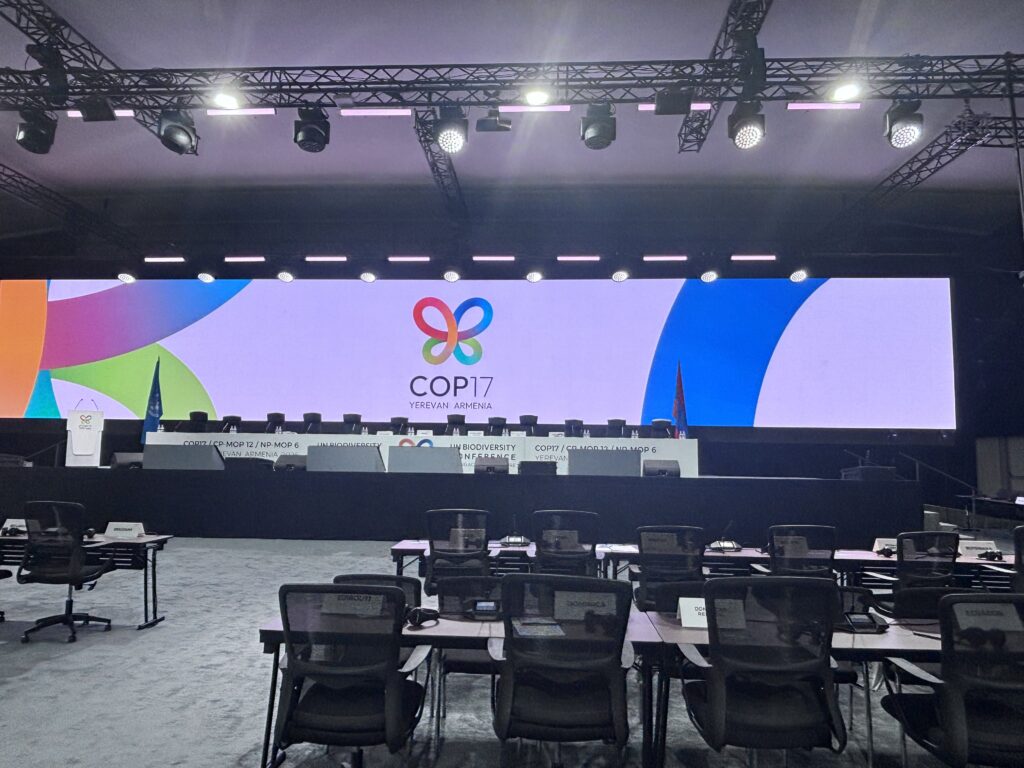
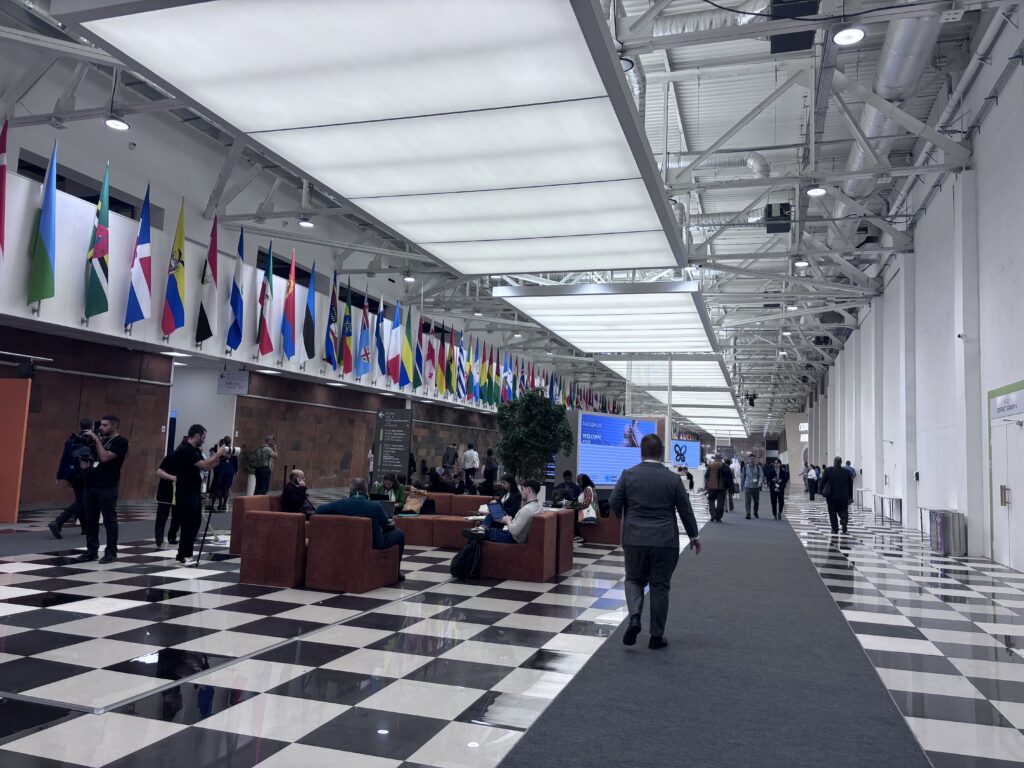
Every two years the global biodiversity community meets under the banner of the UN Convention on Biological Diversity (CBD) to negotiate international agreements, discuss progress, share knowledge, seek funding and network. This year the meeting, the CoP17 was held in Yerevan, Armenia, with the tag line ‘Taking Action for Nature’. I spent a fascinating (and exhausting) week as an official observer at the CoP17. This meeting was especially significant because it is the half way point for the Kunming-Montreal Global Biodiversity Framework (KMGBF) targets for 2030. Therefore, a key aim of the CoP was to undertake a global stocktake of progress against these 4 goals and 23 targets.
Two clear messages came through right at the start of the CoP. At the dazzling opening ceremony the Prime Minister of Armenia HE Nikol Pashinyan reminded delegates that, first, there had been some progress on commitments to the 2030 goals, but that there was still a lag in terms of implementation; but second, that there was a need for more ambitious practical actions to implement the KMGBF, and these had to gather pace. He also stressed that nature and culture are deeply connected in Armenia– for example the Armenian artform of Trchnagir, involves forming letters from figures of birds. Likewise, Astrid Schomaker, Executive Secretary of CBD, stated that ‘We need to transform human relations with nature to create a just, resilient and equitable future’. The Leaders Summit released The Yerevan Declaration, which emphasised the ongoing commitment to meet the 2030 targets, but stopped short of committing to the finance to support it.

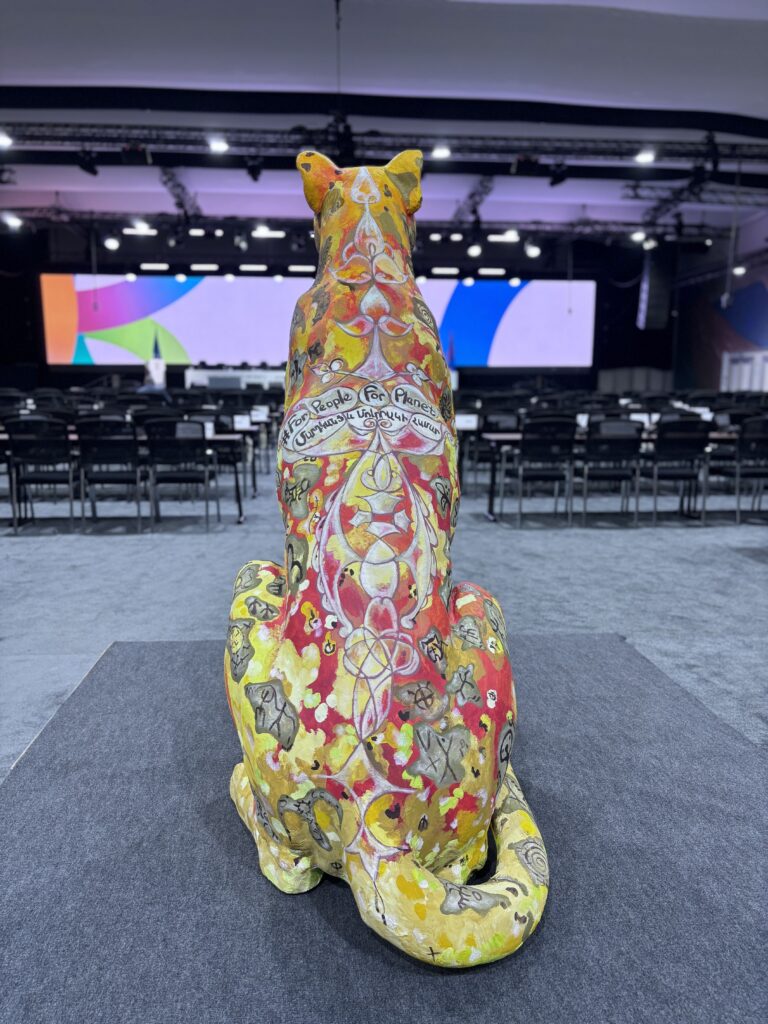
The overall message was that conservation alone is no longer sufficient. Instead, there were calls for restoration, recovery, rewilding and reintroductions to address the biodiversity crisis. This interlinked well with one of the focal points of Armenian conservation: efforts to restore populations of the Caucasian (or Persian) leopard; the main negotiating hall featured an ornate sculpture, by Yevgine Onanyan, of a leopard, intently watching the discussions during the CoP. These included the need for more support and finance to implement the KMGBF at national levels, and representatives of Global South countries often cited concerns about lack of capacity for reporting, monitoring and implementation.
It was clear that delegates were grappling with the rising challenges of synthetic biology and the potential for countries to lose out in access and benefit sharing from gene sequencing – with calls for clear global regulation of this expanding field. I was looking out for sessions on health and biodiversity. I was surprised by how little there was specifically on health. There was an official Contact Group negotiation on Health and Biodiversity scheduled at 19.30 one day, and a small number of side events that specifically addressed One Health. These were largely framed in terms of the threat of zoonosis – arising from trading, consuming and living with wildlife.
One of the most fascinating things about the conference, apart from the official negotiations and side events, was observing the networking and deal making. The CoPs are a chance for match making, to secure lucrative deals to support conservation programmes all over the world. I’ve always been concerned about this – the philanthropy model puts enormous power in the hands of the millionaires and billionaires to decide which species and ecosystems matter, whilst obscuring the role of extreme wealth inequality as a driver of biodiversity loss. But here, the very dynamics I (and others) have written about in conservation were on display – drinks receptions, donor dinners, coffee meetings – all provided opportunities for conservationists to promote their projects and seek funding deals.
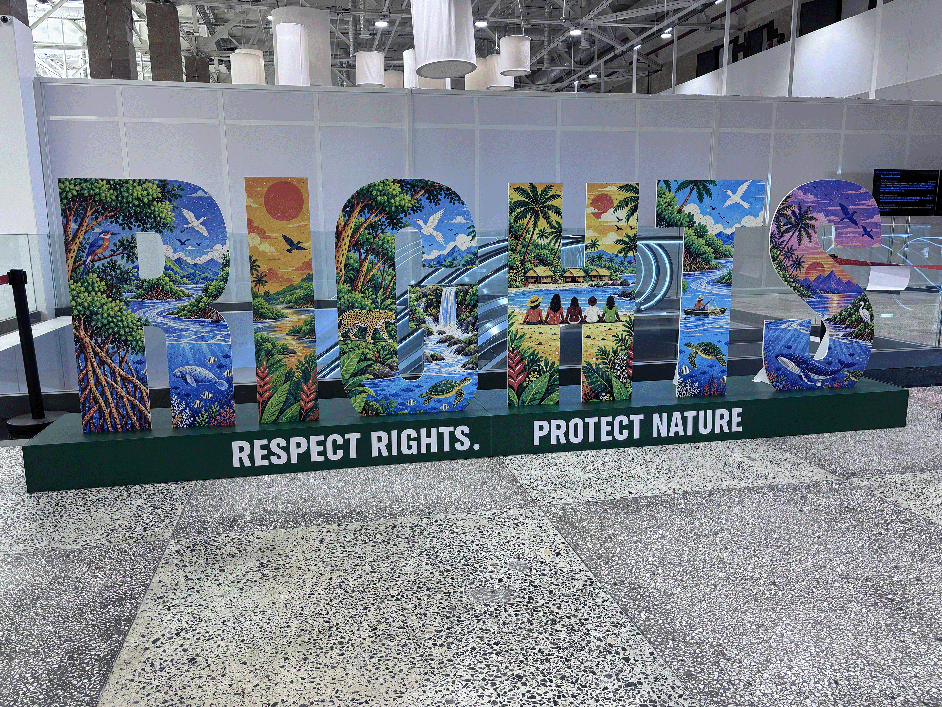
There were some welcome critical voices – the CBD Alliance were actively leafleting the negotiators with messages about the need to address the ecologically destructive effects of the global economy; the Youth representatives staged a slow walk through the convention centre changing ‘You can’t eat money’; Friends of the Earth International held a press conference on case studies detailing the ways some solutions, like offsets and biodiversity credits, promoted by the CBD had led to displacement and violence; representatives of Indigenous Peoples and Local Communities (IPLCs) stressed the need to respect rights and cultures in biodiversity protection. Being at the CoP, it is hard not to get swept up in the positivity, knowledge sharing and sheer spectacle of so many committed people from all over the world. But, in the end while some progress has been made against the KMGBF targets, it’s very unlikely that (globally) any of them will be met by 2030, and sadly there seemed to be little appetite for the kinds of fundamental change that is needed.